How to Clear a Green Pool: A Step-by-Step Plan That Actually Works
Green water is algae, and algae loses to sustained chlorine. Here is the exact process — test, shock to the right level for your stabilizer, brush, filter and hold until it is truly gone.
Key takeaways
- Green water means chlorine was too low for too long — the fix is chlorine held high, not a single dose.
- Your shock level depends on CYA: roughly 40% of the stabilizer reading.
- Brush daily and run the filter around the clock until the water is clear.
- You are done when chlorine loses 1 ppm or less overnight and the water is crystal clear.
A green pool looks like a disaster, but it is one of the most fixable problems in the pool world. Green means algae, and algae has one weakness: free chlorine held at a high enough level for long enough. The mistake most people make is dumping in a bag or two of shock, watching it turn blue-ish for a day, and then watching it go green again.
Here is the process pool techs use to clear a green pool for good.
Step 1: Test before you buy anything
You need two numbers: pH and CYA (stabilizer). pH tells you whether chlorine will work efficiently. CYA tells you how much chlorine it will take. If you skip the CYA test, you are guessing.
- Bring pH down to about 7.2–7.4 before shocking. Chlorine is far more effective at lower pH.
- If CYA is very high (above about 80–90 ppm), consider a partial drain first. Otherwise the chlorine level you need becomes impractical.
Step 2: Clean out the debris
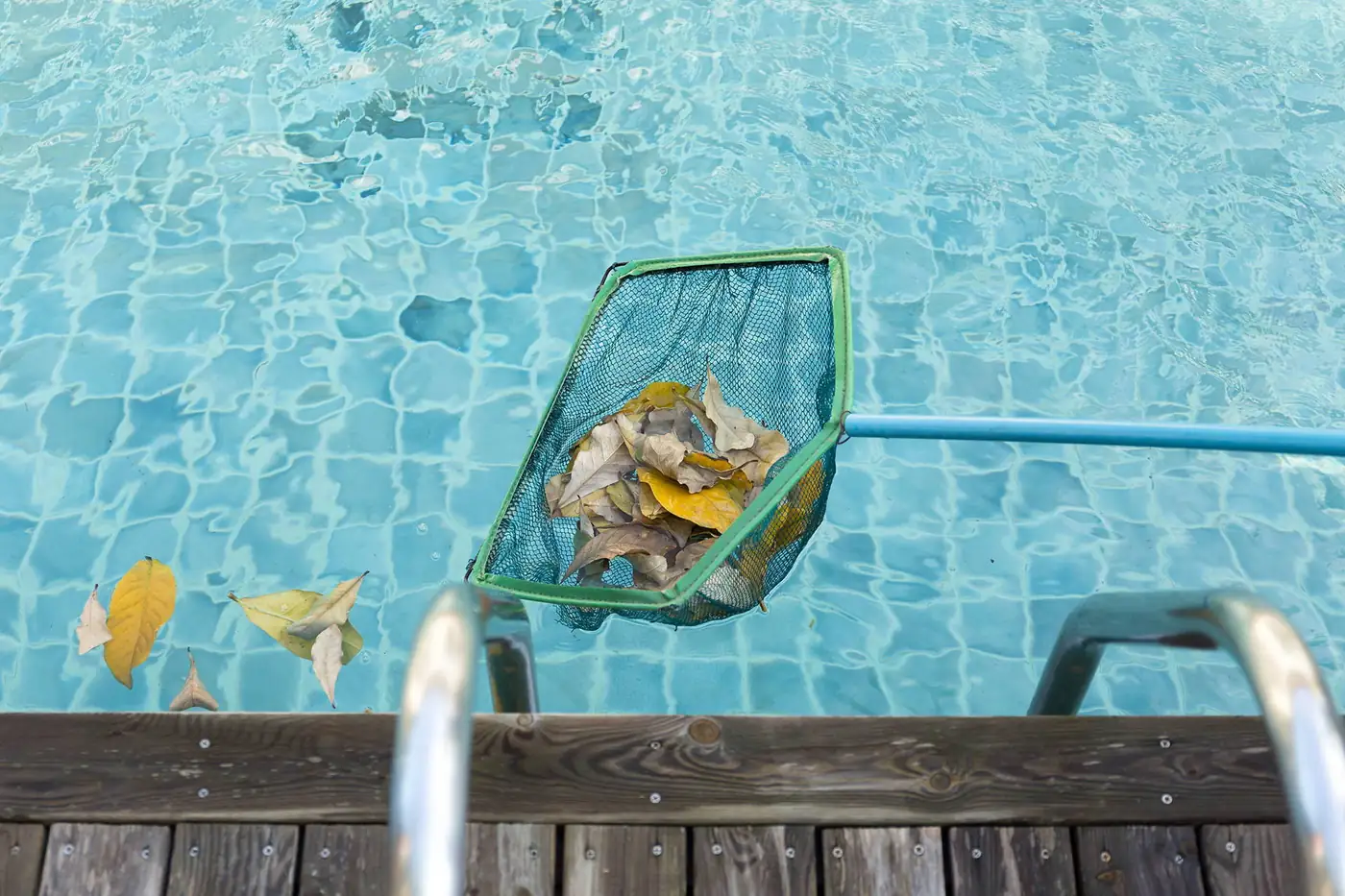
Scoop leaves and sticks, empty the skimmer and pump baskets, and clean or backwash the filter. Every leaf you leave in the pool eats chlorine you are trying to use on algae.
Step 3: Raise free chlorine to shock level
Your shock level is roughly 40% of your CYA. With CYA at 30 ppm, shock level is about 12 ppm. At 50 ppm CYA, it is about 20 ppm. Our chlorine & stabilizer chart shows the number for your pool, and the dosing calculator tells you how much chlorine to add.
Liquid chlorine (10–12.5% sodium hypochlorite) is the best choice for clearing a green pool. Dichlor and trichlor add stabilizer with every dose, which raises the shock level you need. Cal-hypo works but adds calcium.
Step 4: Hold it there
This is the step that separates success from frustration. Test free chlorine at least two or three times a day and add chlorine to bring it back up to shock level each time. Algae will eat through chlorine quickly at first; that is normal and it means the process is working.
Step 5: Brush, filter, repeat
- Brush the walls, floor, steps and behind ladders at least once a day.
- Run the pump 24 hours a day until the pool is clear.
- Clean or backwash the filter whenever pressure rises 8–10 psi above its clean reading. A green pool clogs filters fast.
Step 6: Know when you are done
Keep going until all three of these are true:
- The water is crystal clear — you can see the main drain clearly.
- Combined chlorine is 0.5 ppm or less.
- Free chlorine drops 1 ppm or less overnight (test at dusk, test again at dawn).
That overnight test is the real proof. If chlorine is still disappearing overnight, there is still algae or organic material in the pool, and stopping now is how pools turn green again a week later.
How long does it take?
A lightly green pool can clear in two or three days. A dark green “swamp” can take a week or more, especially with a sand filter. Patience and consistent chlorine win every time.
Preventing a repeat
- Never let free chlorine fall below about 7.5% of your CYA.
- Brush weekly, especially shady corners and steps.
- Run the pump long enough each day to turn over the water.
- Keep CYA from creeping up by using liquid chlorine or a salt cell instead of daily trichlor.
Not sure it is algae? Try the Pool Doctor — it walks through green water, cloudy water and other symptoms side by side.
Still have a question about this?
Ask a Pool Tech