How to Clear a Green Pool: A Step-by-Step Plan That Actually Works
Green water is algae, and algae loses to sustained chlorine. Here is the exact process — test, shock to the right level…
Read guideTry
Free guides, calculators & answers
Green water, cloudy water, chlorine that won't hold, a pump that won't prime — get plain-English fixes with pro-level detail, plus the calculators to get the dose right the first time.
Popular: Green pool Cloudy water How much chlorine? Container pools
The pool library
 Water Chemistry
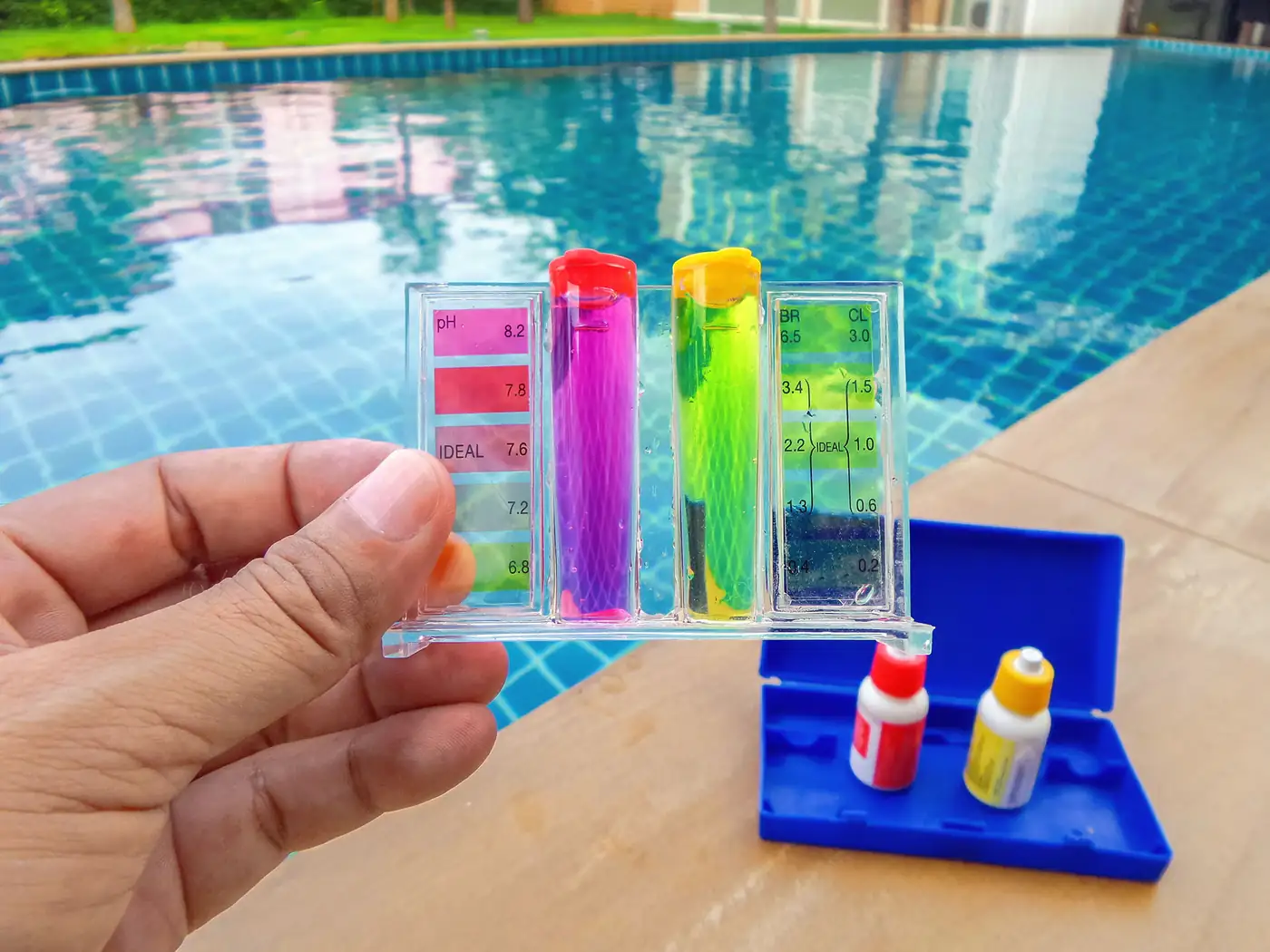
Chlorine, pH, alkalinity, stabilizer and salt — what every number means and how to move it.
3 guides
Water Chemistry
Chlorine, pH, alkalinity, stabilizer and salt — what every number means and how to move it.
3 guides
 Cleaning & Care
Weekly routines, openings, closings and the habits that keep water clear with less work.
4 guides
Cleaning & Care
Weekly routines, openings, closings and the habits that keep water clear with less work.
4 guides
 Problems & Fixes
Green water, cloudy water, algae, stains, leaks — diagnosed and fixed step by step.
4 guides
Problems & Fixes
Green water, cloudy water, algae, stains, leaks — diagnosed and fixed step by step.
4 guides
 Equipment
Pumps, filters, heaters, cleaners and salt cells — how they work and what to buy.
4 guides
Equipment
Pumps, filters, heaters, cleaners and salt cells — how they work and what to buy.
4 guides
 Surfaces & Coatings
Plaster, pebble, tile, paint and spray-applied coatings for pools and decks, compared honestly.
5 guides
Container Pools
Shipping container pools from steel box to backyard — cost, build, finishes and the business behind them.
2 guides
Surfaces & Coatings
Plaster, pebble, tile, paint and spray-applied coatings for pools and decks, compared honestly.
5 guides
Container Pools
Shipping container pools from steel box to backyard — cost, build, finishes and the business behind them.
2 guides
Pool math, done for you
Find your gallons, dose chlorine and balancers precisely, and see exactly where your chlorine should sit for the stabilizer in your water.
Ideal water, at a glance
Hit these ranges and most pool problems never start. Each bar shows the sweet spot inside the full test range.
Most-read guides
Green water is algae, and algae loses to sustained chlorine. Here is the exact process — test, shock to the right level…
Read guideFree chlorine, pH, alkalinity, calcium, stabilizer, salt and combined chlorine — what each number does, the range to aim for, and how…
Read guideHazy, milky or dull water almost always traces back to chlorine, chemistry or filtration. Work through these nine causes in order and…
Read guideEverything to know before you buy or build a shipping container pool: sizes, realistic costs, how they are built, interior finishes and…
Read guideA 30-minute weekly routine that keeps water clear and equipment healthy — plus the monthly and seasonal checks most owners forget.
Read guideAll "shock" is not the same. What each type adds to your water besides chlorine, when to use which, and the side…
Read guideFor contractors, fabricators & entrepreneurs
Every shipping container pool needs its steel sealed with a seamless, rust-proof waterproof membrane. Spray polyurea does it in a fraction of the time — and very few applicators specialize in it yet.
Tell us where you are. An ArmorThane advisor will reach out with equipment, training and pricing options.
Season by season
Tick items off as you go — your checks are saved on this device.
Still stuck?
Send your question with your test readings. We read every one, and the most common questions become new guides.
Ask your questionTest free chlorine and pH two or three times a week (daily during hot, heavy-use stretches). Test alkalinity, calcium hardness, stabilizer (CYA) and salt about once a month.
Most outdoor pools do well at 3–5 ppm free chlorine, but the right minimum depends on your stabilizer: keep free chlorine at least 7.5% of your CYA level. Our chlorine & stabilizer chart does the math for you.
A single dose rarely clears algae. You need to raise chlorine to shock level for your CYA and hold it there — testing and re-dosing several times a day — until the water is clear and chlorine holds overnight.
Long enough to filter the whole pool volume about once a day. With a variable-speed pump, running at a low speed for more hours is usually the most efficient way to get there.
No. A salt chlorine generator makes chlorine from dissolved salt. The water is much less salty than the ocean, and you still need to manage pH and stabilizer.