Pool Resurfacing Options Compared: Plaster, Pebble, Tile, Paint and Spray-Applied Coatings
When the surface is rough, stained or leaking, you have more choices than plaster. How each finish compares on feel, durability, downtime and maintenance.
Key takeaways
- Rough, stained or etched surfaces are normal aging — not a crisis, but a signal to plan.
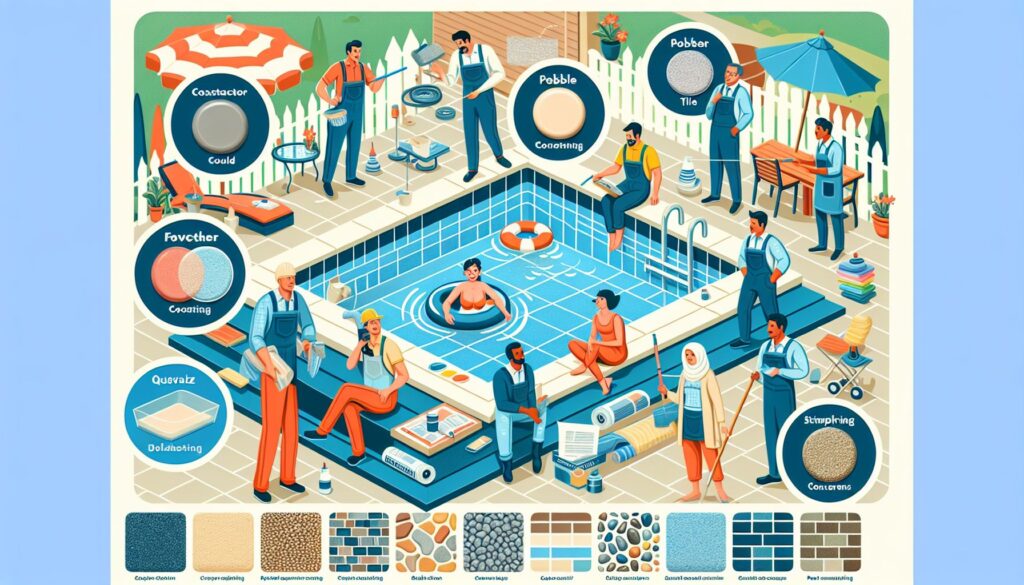
- Plaster is the classic; aggregate finishes (quartz, pebble) last longer and hide stains better.
- Paint is the budget refresh; it needs regular recoating.
- Spray-applied systems shine where a seamless, flexible, waterproof membrane matters most.
Every pool surface eventually wears out. Plaster gets rough and stained, paint chalks and peels, and small cracks start letting water where it should not go. When it is time to resurface, the choice you make affects how the pool feels, how much maintenance it needs and how long it lasts.
Signs it is time to resurface
- Rough texture that snags swimsuits or scrapes feet
- Stains that do not respond to chemistry or stain treatments
- Etching, pitting or exposed aggregate
- Delamination (hollow-sounding areas), cracks or chips
- Peeling or chalking paint
- Persistent black algae in porous areas
The main options
| Finish | Feel | Typical life* | Notes |
|---|---|---|---|
| White plaster (marcite) | Smooth | Roughly 7–12 years | Classic look; shows stains; needs balanced water |
| Quartz aggregate | Smooth, slightly textured | Roughly 10–15 years | More stain-resistant than plain plaster; many colors |
| Pebble aggregate | Textured | Roughly 15–20+ years | Very durable, natural look; rougher underfoot |
| Tile (full) | Smooth | Decades | Premium price and labor; grout needs care |
| Epoxy or acrylic paint | Smooth | A few years per coat | Budget refresh; recoat regularly; prep is everything |
| Spray-applied coatings (e.g., polyurea systems) | Smooth to textured | Depends on system and topcoat | Seamless, flexible membrane; fast return to service |
*Life depends heavily on water chemistry, climate, use and workmanship. Treat these as rough comparisons, not guarantees.
Plaster and aggregate finishes
Traditional plaster is still the most common finish on concrete pools. Quartz and pebble finishes mix decorative aggregate into the plaster for better durability and a richer look. All of them are cementitious, which means water balance (pH, alkalinity and calcium) directly affects how long they last. Use the LSI calculator to keep them protected.
Paint
Epoxy and acrylic pool paints are the most affordable way to refresh a pool’s look. Success depends almost entirely on prep — cleaning, etching or profiling, and complete drying. Expect to recoat on a regular cycle.
Spray-applied coating systems
Plural-component spray coatings — polyurea, polyurethane and polyaspartic systems — are sprayed hot and cure in seconds to minutes into a seamless, elastic membrane. That seamless, flexible quality is why they are widely used on concrete tanks, water features, decks and steel structures.
For pool interiors, these coatings are typically used as part of a system: a waterproof base layer bonded to the properly prepared substrate, plus a compatible topcoat chosen for UV exposure and the pool’s sanitizer and water chemistry. When evaluating any interior coating, ask the manufacturer for:
- Immersion-service data and recommended topcoat
- Chlorine and salt-water resistance information
- Surface preparation requirements (for steel, typically abrasive blasting to a specified profile)
- Recoat and repair procedures
Spray-applied polyurea is a natural fit for shipping container pools, where steel must be fully sealed against water and corrosion and every weld and cut-out needs to be bridged by one continuous membrane.
Pool decks
Decks take a beating from sun, chemicals and bare feet. Coatings with slip-resistant textures and UV-stable topcoats can refresh worn concrete and make it cooler and safer underfoot. See our guide to pool deck coatings.
Still have a question about this?
Ask a Pool Tech