Pool Shock Explained: Liquid Chlorine vs. Cal-Hypo vs. Dichlor vs. Non-Chlorine
All "shock" is not the same. What each type adds to your water besides chlorine, when to use which, and the side effects nobody mentions on the bag.
Key takeaways
- "Shock" is just a large dose of an oxidizer — usually chlorine.
- Every chlorine product adds something else: calcium, stabilizer, or nothing at all (liquid chlorine).
- Non-chlorine shock (MPS) oxidizes but does not sanitize or kill algae.
- Shock at dusk so sunlight does not burn off the chlorine before it works.
Walk down the chemical aisle and you will see a dozen products labeled “shock.” They all raise the oxidizer level in your pool quickly, but they are not interchangeable. Each one leaves something behind, and over a season those leftovers add up.
What “shocking” really means
Shocking is simply raising free chlorine (or another oxidizer) high enough, for long enough, to burn off contaminants — sweat, sunscreen, chloramines and algae. The product you use matters less than reaching the right level for your stabilizer and holding it.
The main types, side by side
| Product | Typical strength | Also adds | Best for |
|---|---|---|---|
| Liquid chlorine (sodium hypochlorite) | 10–12.5% | Nothing that builds up (a little salt) | Everyday chlorine, clearing algae |
| Cal-hypo (calcium hypochlorite) | 65–73% | Calcium — about 0.7 ppm CH per 1 ppm FC | Pools with low calcium, convenient storage |
| Dichlor (sodium dichlor) | 56–62% | Stabilizer — about 0.9 ppm CYA per 1 ppm FC | New pools that need CYA, spas |
| Trichlor (tablets) | ~90% | Stabilizer (about 0.6 ppm CYA per 1 ppm FC) and acid | Slow feed in a chlorinator — not shocking |
| Non-chlorine shock (MPS) | Varies | Sulfates | Oxidizing swimmer waste between chlorine doses |
Liquid chlorine: the pro favorite
Liquid chlorine is what most service techs carry. It dissolves instantly, adds nothing that accumulates, and is easy to dose precisely. It loses strength over time (faster in heat), so buy it fresh and store it in the shade.
Cal-hypo: strong, but watch your calcium
Cal-hypo is powerful and stores well, but every dose raises calcium hardness. In plaster pools with soft fill water, that can be useful. In areas with hard water, it pushes you toward scale. Pre-dissolve it in a bucket of pool water to avoid bleaching vinyl or leaving undissolved granules on the floor.
Dichlor: stabilizer included
Dichlor is handy when you need to add stabilizer anyway — a freshly filled pool, for example. Used every week, though, it steadily raises CYA until chlorine stops working well.
Non-chlorine shock: oxidizer, not sanitizer
Potassium monopersulfate (MPS) breaks down swimmer waste so you can swim again quickly, but it does not kill algae or bacteria. It can also show up as combined chlorine on DPD test kits unless you use a neutralizing reagent.
How to shock correctly
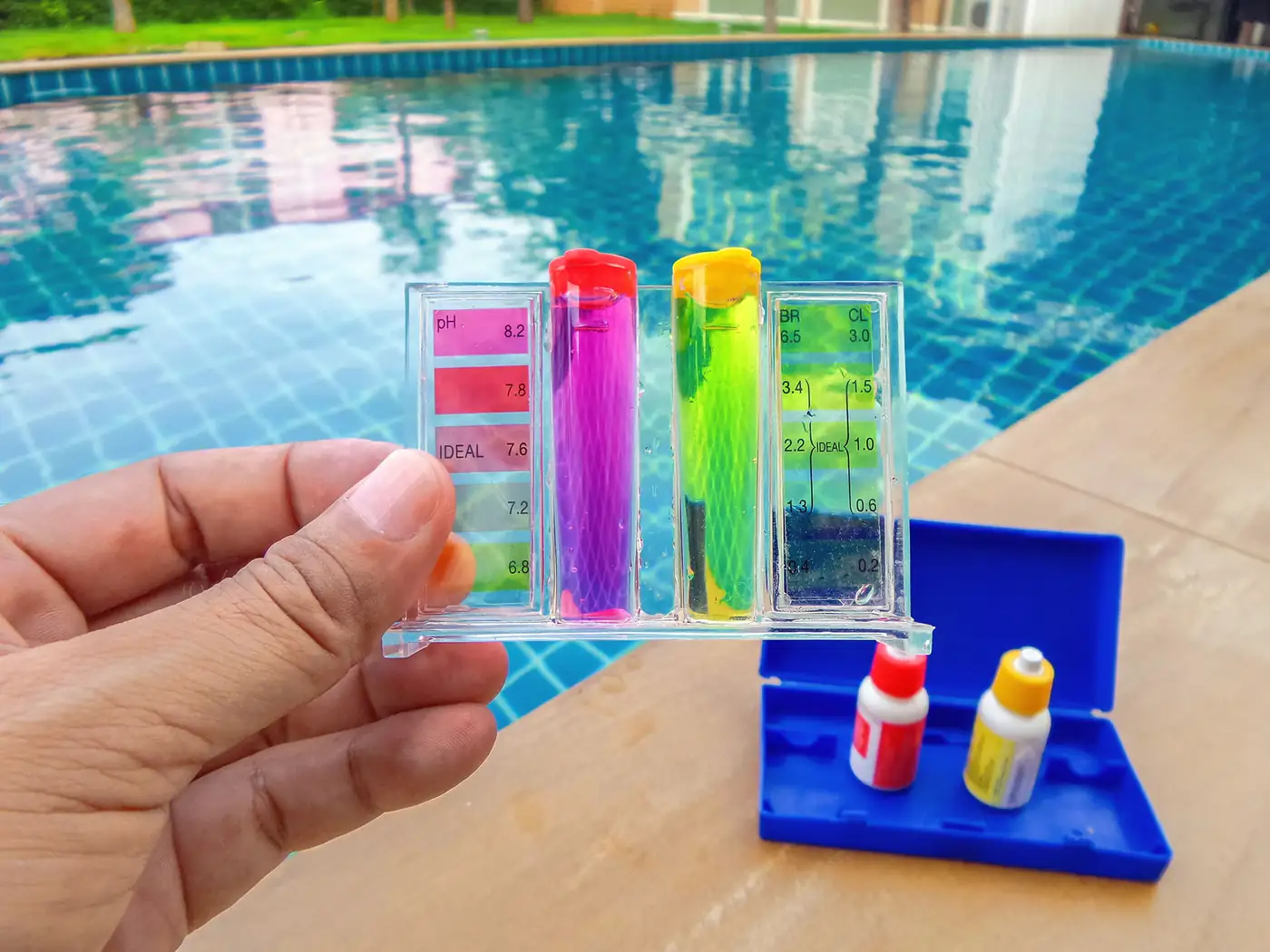
- Test pH and CYA. Adjust pH to about 7.2–7.4.
- Find your target with the chlorine & stabilizer chart.
- Calculate your dose with the dosing calculator.
- Add it at dusk, in front of a return, with the pump running.
- Brush the pool and keep circulating. Retest in a few hours.
Never mix chlorine products with each other or with acid, and never add water to chemical — always chemical to water. Store chlorine and acid separately, away from kids and pets.
Still have a question about this?
Ask a Pool Tech