How to Close (Winterize) a Pool: Step by Step
Closing a pool right is what makes spring opening easy. Balance, clean, lower the water, protect the plumbing from freezing and cover it tight.
Key takeaways
- Balance and clean the water first — you are sealing in whatever is there.
- In freezing climates, water left in plumbing and equipment is what does the damage.
- Use only pool-grade (propylene glycol) antifreeze, never automotive.
- In mild climates, keep the pool running at a reduced schedule instead of closing.
A good closing is the difference between pulling a cover off clear water in spring and pulling it off a swamp. It is also how you protect thousands of dollars of plumbing and equipment from freeze damage. Here is the sequence pool techs follow in freezing climates.
1. Balance the water (a few days before)
Bring pH to 7.4–7.6, alkalinity to 80–120 ppm and calcium to its target range. Balanced water will not etch or scale a resting pool surface over the winter.
2. Clean thoroughly
Brush and vacuum everything. Remove leaves from the floor — anything you leave will stain and consume chlorine all winter. Clean the filter.
3. Shock
Raise free chlorine to a solid level for your CYA a day or two before closing and let it drop back toward normal before you add any winter algaecide (high chlorine can break some algaecides down).
4. Lower the water level
For most in-ground pools with a mesh or solid safety cover in freezing climates, lower the water below the skimmer mouth and the return fittings, following your cover manufacturer’s guidance. Some pools use skimmer plugs and freeze-protection devices instead of a large drop — what matters is that no water sits trapped where it can freeze and crack a fitting.
5. Blow out and plug the lines
- Use a shop vac or blower at the equipment to push water out of each return, skimmer and cleaner line until you see bubbles at the pool end.
- Plug each line at the pool end with a winterizing plug.
- Add pool-grade antifreeze (propylene glycol) to lines where recommended. Never use automotive antifreeze.
6. Drain the equipment
Open drain plugs on the pump, filter, heater and chlorinator. Remove the salt cell or chlorinator if your manufacturer recommends it. Store small parts and drain plugs in the pump basket so you can find them in spring.
7. Cover it
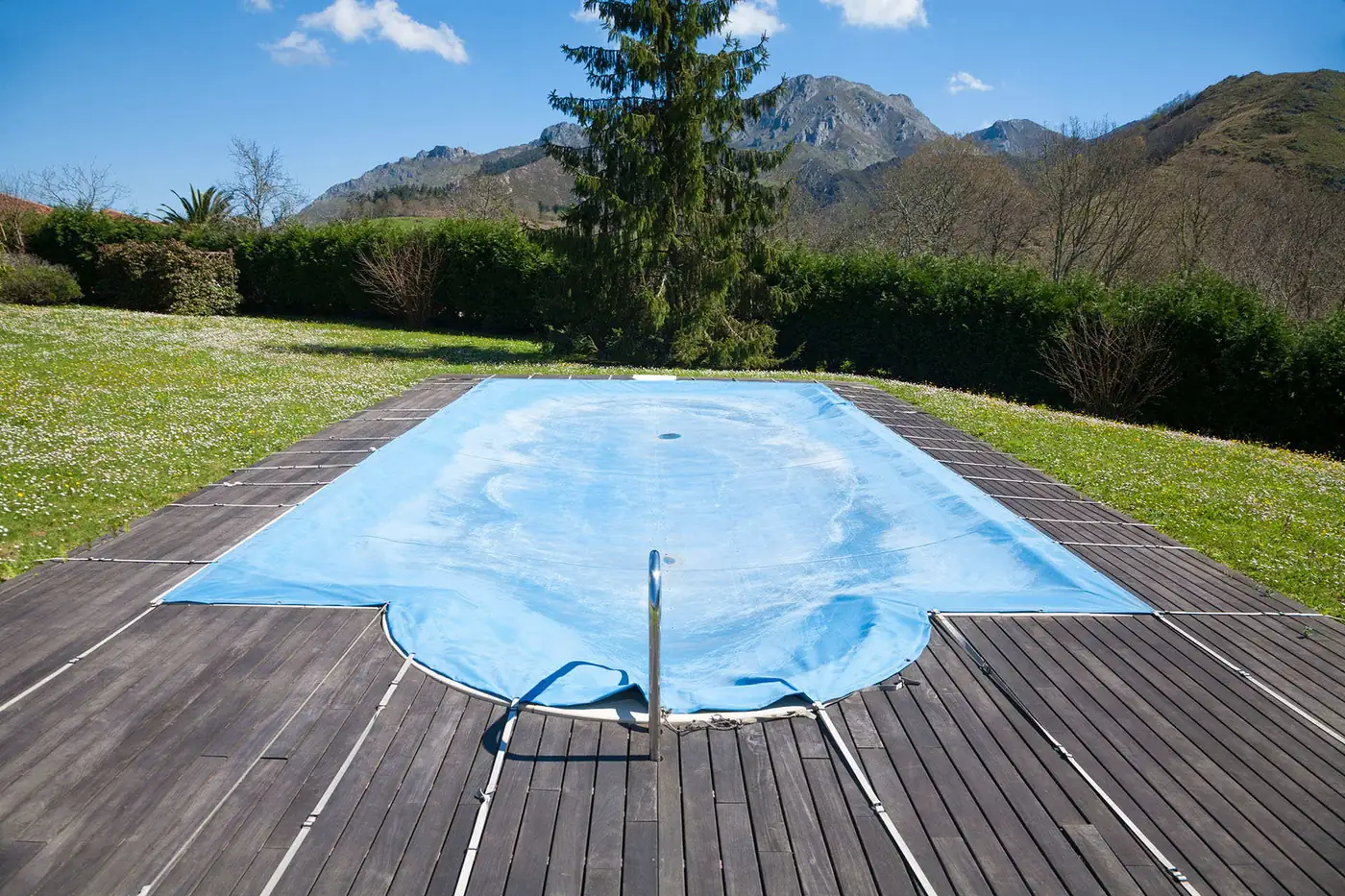
A properly tensioned safety cover protects against debris and keeps people and pets out. Solid covers block sunlight and algae growth; mesh covers drain rainwater but let fine debris through.
In a mild climate? Do not close — slow down
Where freezing is rare, keep the pump running on a reduced schedule, keep chlorine in range (it lasts longer in cool water) and use a freeze-protection setting on your controller for cold snaps.
Closing is the perfect time to note rough plaster, peeling paint or failing coatings. Off-season is when resurfacing and coating contractors have the most availability.
Still have a question about this?
Ask a Pool Tech